
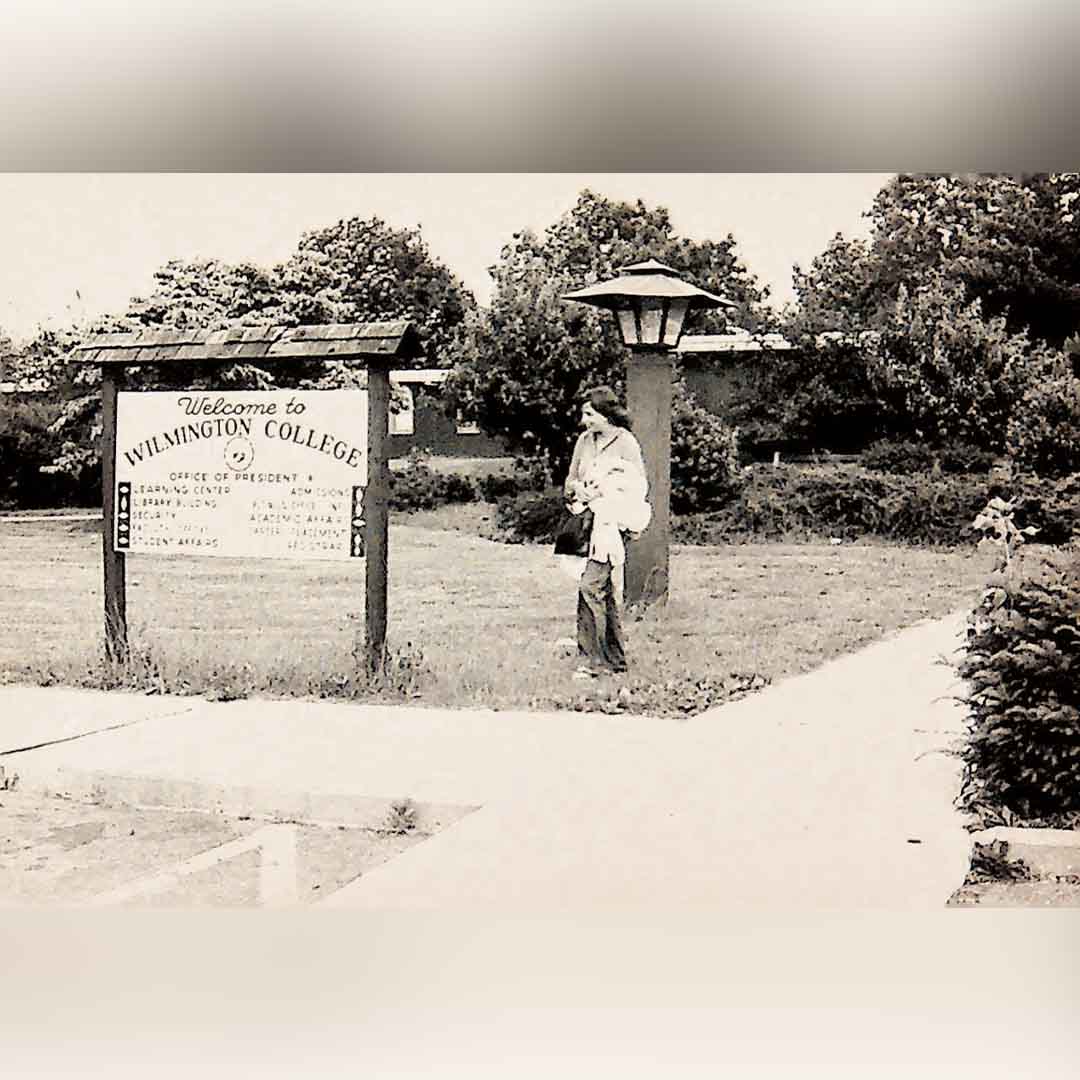
“Welcome to Wilmington College,” 1970s
Every university has stories waiting to be discovered. Wilmington University is no different.
Some stories are found in a faded photograph tucked inside an envelope. Sometimes they are recorded on an old VHS tape, scribbled in the margin of an inter-office memo, or packed away in a long-forgotten box. Other stories live in the memories of the faculty, staff, students and alumni who experienced them firsthand.
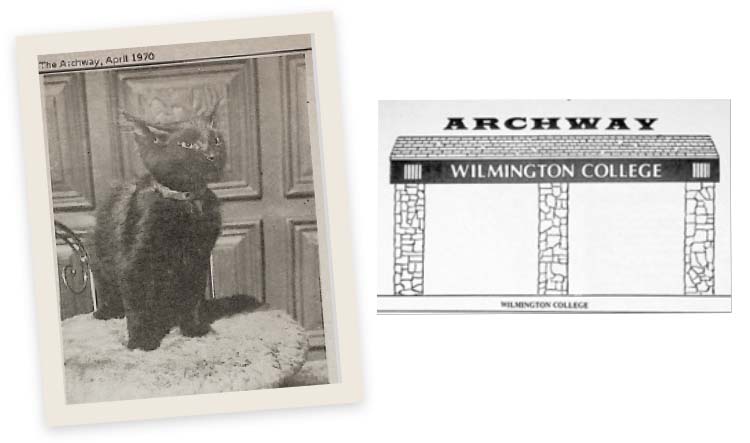
Many records from Wilmington University’s past survived because someone decided to keep them. Others remain hidden in offices, file cabinets, storage closets, and personal collections — still waiting to be rediscovered.
During its first year, the Wilmington University Archives and Special Collections Department brought many of those missing pieces together by identifying, preserving, and sharing the records, objects and memories that tell Wilmington University’s story.
The First Chapters
Before it was Wilmington University, it was first Wilmington College.
Long before Wilmington University became the institution it is today, a series of firsts shaped its future: its first students, first commencement ceremony, first accreditation, first athletics teams, and first mascot. What we now recognize as milestones were once simply part of the day-to-day work of building a new college.
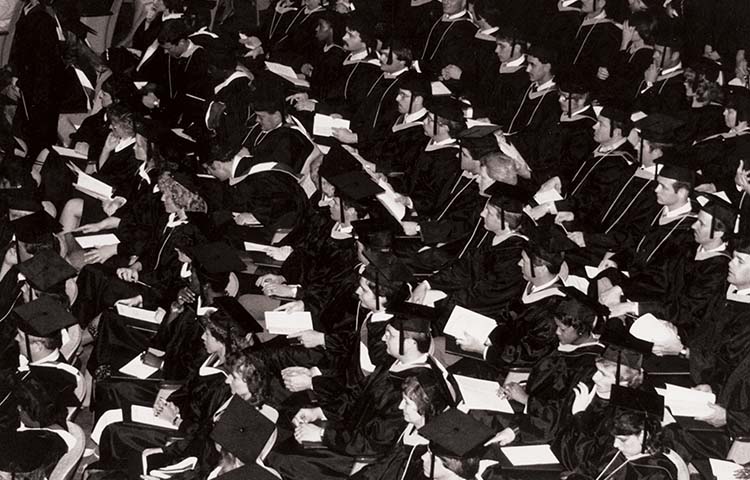
Every item in the Archives tells part of that story. Early institutional records, publications, and memorabilia document a young Wilmington College as it was finding its unique identity. Photographs shared by alumni add another perspective by capturing student life, activities, traditions, and everyday moments that are not typically found in official records. Together, these materials provide a more nuanced understanding of the decisions, experiences, and people that helped shape the University.
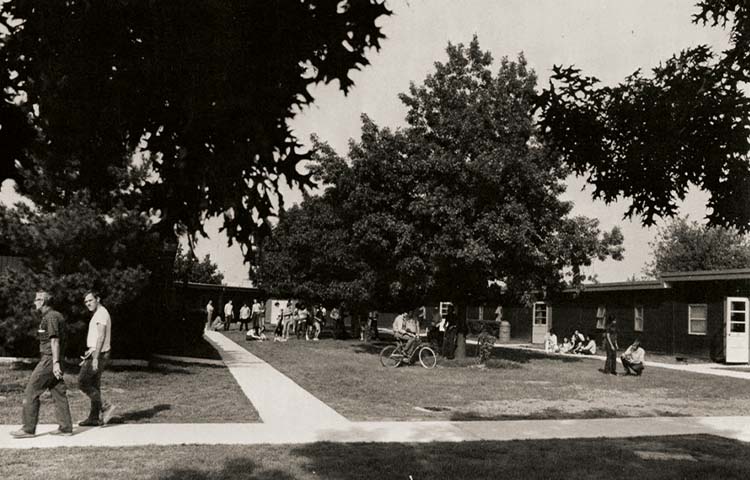
Those perspectives become clear when comparing different archival records side by side. A photograph of students in their dorm room, paired with original architectural drawings of the residence halls, provides documentation of buildings that no longer exist while also offering a glimpse into the lives of the students who once called them home.
The Stories Behind the Objects
While the archival collections are interesting on their own, it is often the stories behind the objects that add context and make them more meaningful. Those stories cannot be captured in a single document or photograph. Instead, they emerge through collaborations and conversations held between the people and the collections.
One of the Archives’ most valuable collaborations during its first year was with the Alumni Relations Department. Staff from the Alumni Relations Department served as a bridge between the Archives Department and Charter Class alumni, as well as other graduates interested in donating memorabilia and other materials from Wilmington College’s early years. Conversations with alumni often developed into something more significant than simply adding an item to the collection. They sparked memories, renewed connections, and inspired alumni to share personal stories from the University’s earliest years.
Changing the Conversation
Since Archives and Special Collections is a new department, much of the first year was spent raising awareness of the Archives and its mission across the University community. Through presentations, meetings and conversations, faculty and staff were encouraged to think differently about the records and historical materials in their care. That awareness soon began making a difference.
Not every important discovery begins with a donation. Sometimes it starts with a simple question: “Should we keep this?”
Throughout the year, departments across the University paused to ask that question as they reorganized offices, cleaned out storage rooms, and sorted through decades of materials. What first appeared to be just old files, outdated media, or forgotten keepsakes often became another missing piece of Wilmington University’s history and found a permanent home in the Archives.
As awareness grew, so did the collections. Transfers from University departments and generous donations from alumni nearly doubled the Archives’ holdings during its first year, preserving additional records, photographs, publications, and artifacts that help tell Wilmington University’s story.
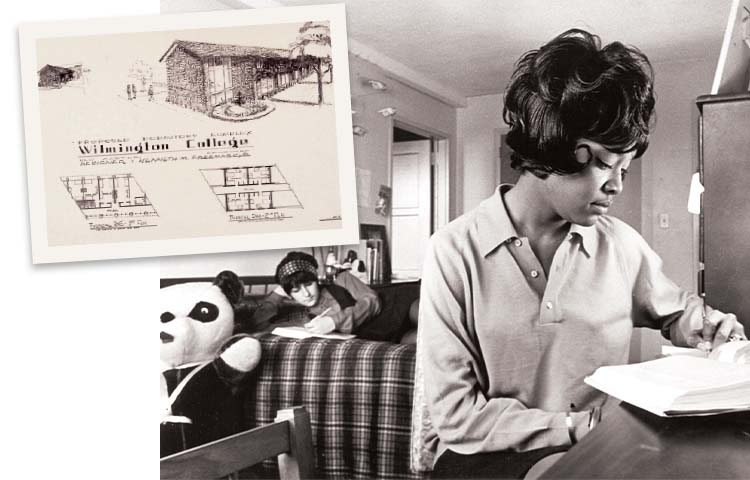
Residence life during the 1970s and the original architectural drawings of the proposed dormitory complex, 1970 (inset). The photograph documents a part of campus that no longer exists while preserving a glimpse of everyday student life.
Piece by Piece
Archival work is often similar to assembling a puzzle.
A photograph helps identify a person or event mentioned in another collection. A yearbook can fill in a missing date or name. A newspaper clipping adds context to a memory shared decades later. Individually, each item tells only part of the story. Collectively, these items fill in the gaps and provide a more complete history of Wilmington University.
The first year of the Wilmington University Archives and Special Collections Department has been filled with generous donations, unexpected discoveries, and meaningful conversations.
Many stories have already been shared, but many more are still waiting to be heard.
Wilmington University’s history isn’t finished. As the University continues to grow and experience new “firsts,” the Wilmington University Archives and Special Collections Department looks forward to preserving today’s history while continuing to uncover the stories that connect generations of the Wilmington community.
—Adrienne Johnson
The history of Wilmington University belongs to all of us. If you would like to donate photographs, publications, memorabilia, University records, or other materials that help tell the University’s story, the Wilmington University Archives and Special Collections Department would welcome the opportunity to hear from you. Contact us at archives@wilmu.edu.
Want to read more in-depth stories? Explore our latest magazine articles.
“Welcome to Wilmington College,” 1970s
Every university has stories waiting to be discovered. Wilmington University is no different.
Some stories are found in a faded photograph tucked inside an envelope. Sometimes they are recorded on an old VHS tape, scribbled in the margin of an inter-office memo, or packed away in a long-forgotten box. Other stories live in the memories of the faculty, staff, students and alumni who experienced them firsthand.
Many records from Wilmington University’s past survived because someone decided to keep them. Others remain hidden in offices, file cabinets, storage closets, and personal collections — still waiting to be rediscovered.
During its first year, the Wilmington University Archives and Special Collections Department brought many of those missing pieces together by identifying, preserving, and sharing the records, objects and memories that tell Wilmington University’s story.
The First Chapters
Before it was Wilmington University, it was first Wilmington College.
Long before Wilmington University became the institution it is today, a series of firsts shaped its future: its first students, first commencement ceremony, first accreditation, first athletics teams, and first mascot. What we now recognize as milestones were once simply part of the day-to-day work of building a new college.
Every item in the Archives tells part of that story. Early institutional records, publications, and memorabilia document a young Wilmington College as it was finding its unique identity. Photographs shared by alumni add another perspective by capturing student life, activities, traditions, and everyday moments that are not typically found in official records. Together, these materials provide a more nuanced understanding of the decisions, experiences, and people that helped shape the University.
Those perspectives become clear when comparing different archival records side by side. A photograph of students in their dorm room, paired with original architectural drawings of the residence halls, provides documentation of buildings that no longer exist while also offering a glimpse into the lives of the students who once called them home.
The Stories Behind the Objects
While the archival collections are interesting on their own, it is often the stories behind the objects that add context and make them more meaningful. Those stories cannot be captured in a single document or photograph. Instead, they emerge through collaborations and conversations held between the people and the collections.
One of the Archives’ most valuable collaborations during its first year was with the Alumni Relations Department. Staff from the Alumni Relations Department served as a bridge between the Archives Department and Charter Class alumni, as well as other graduates interested in donating memorabilia and other materials from Wilmington College’s early years. Conversations with alumni often developed into something more significant than simply adding an item to the collection. They sparked memories, renewed connections, and inspired alumni to share personal stories from the University’s earliest years.
Changing the Conversation
Since Archives and Special Collections is a new department, much of the first year was spent raising awareness of the Archives and its mission across the University community. Through presentations, meetings and conversations, faculty and staff were encouraged to think differently about the records and historical materials in their care. That awareness soon began making a difference.
Not every important discovery begins with a donation. Sometimes it starts with a simple question: “Should we keep this?”
Throughout the year, departments across the University paused to ask that question as they reorganized offices, cleaned out storage rooms, and sorted through decades of materials. What first appeared to be just old files, outdated media, or forgotten keepsakes often became another missing piece of Wilmington University’s history and found a permanent home in the Archives.
As awareness grew, so did the collections. Transfers from University departments and generous donations from alumni nearly doubled the Archives’ holdings during its first year, preserving additional records, photographs, publications, and artifacts that help tell Wilmington University’s story.
Residence life during the 1970s and the original architectural drawings of the proposed dormitory complex, 1970 (inset). The photograph documents a part of campus that no longer exists while preserving a glimpse of everyday student life.
Piece by Piece
Archival work is often similar to assembling a puzzle.
A photograph helps identify a person or event mentioned in another collection. A yearbook can fill in a missing date or name. A newspaper clipping adds context to a memory shared decades later. Individually, each item tells only part of the story. Collectively, these items fill in the gaps and provide a more complete history of Wilmington University.
The first year of the Wilmington University Archives and Special Collections Department has been filled with generous donations, unexpected discoveries, and meaningful conversations.
Many stories have already been shared, but many more are still waiting to be heard.
Wilmington University’s history isn’t finished. As the University continues to grow and experience new “firsts,” the Wilmington University Archives and Special Collections Department looks forward to preserving today’s history while continuing to uncover the stories that connect generations of the Wilmington community.
—Adrienne Johnson
The history of Wilmington University belongs to all of us. If you would like to donate photographs, publications, memorabilia, University records, or other materials that help tell the University’s story, the Wilmington University Archives and Special Collections Department would welcome the opportunity to hear from you. Contact us at archives@wilmu.edu.
Want to read more in-depth stories? Explore our latest magazine articles.