WilmU One on One: Dr. Joshua Patterson Discusses WilmU’s New College of Sciences and Engineering
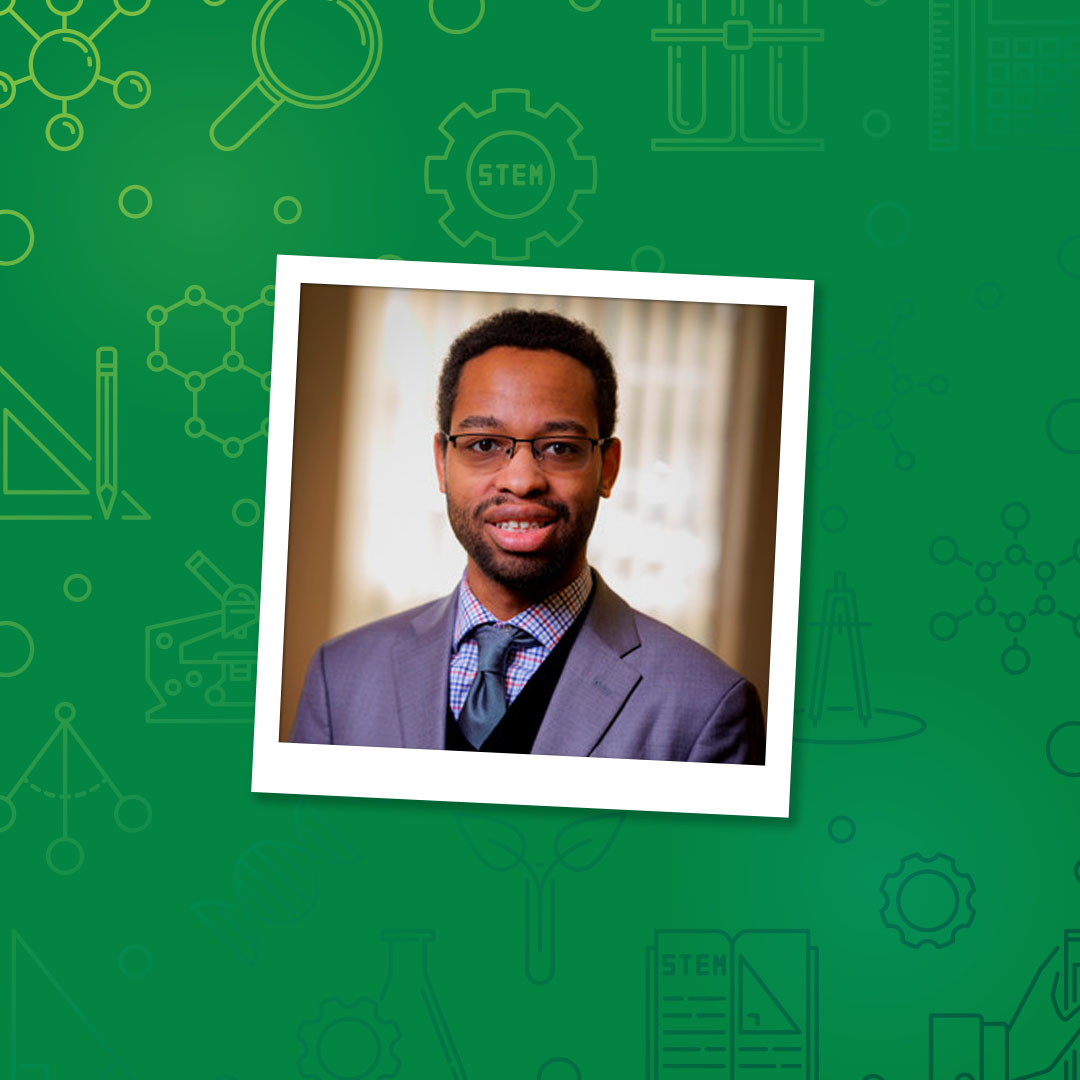
With the launch of its new College of Sciences and Engineering, Wilmington University is taking a bold step toward preparing students for the rapidly evolving demands of today’s STEM workforce.
Designed to break down traditional academic silos and foster interdisciplinary collaboration, the College reflects how science and technology intersect in real-world careers. Helping lead this initiative is Dr. Joshua Patterson, Chair of Graduate Sciences, whose background in applied chemistry, computational biochemistry, and cross-sector education uniquely positions him to guide the next generation of scientists and innovators.
Q. Wilmington University recently launched the College of Sciences and Engineering (COSE). How does this structure benefit students preparing for careers in today’s STEM fields?
The creation of COSE recognizes that modern STEM careers are no longer siloed. Today’s most significant breakthroughs happen at the intersection of different disciplines — where computer science meets biology, or where engineering intersects with environmental science. By bringing these disciplines together, we are fostering a collaborative environment that mirrors the industry landscape. Companies and research labs are looking for hybrid thinkers who can build data pipelines and understand the underlying chemistry. This structure removes traditional academic barriers, allowing students to speak the language of multiple disciplines. It benefits students by building a versatile, adaptable toolkit, transforming students from narrow specialists into dynamic problem solvers ready to lead complex projects.
Q. Can you tell us about your professional and academic background and how it informs your leadership of WilmU’s graduate sciences programs?
I have a Ph.D. in Applied Chemistry with a concentration in Computational Biochemistry from Delaware State University. I have worked in higher ed, medical education, and K-12 education. All of these experiences have prepared me for my role here at WilmU. The interdisciplinary nature of my educational training has allowed me to break down those silos between scientific disciplines and begin collaboration across the new college. My knowledge in chemistry, biology, and environmental matters informs my leadership in our graduate programs, while the computational sciences aspect allows collaboration with our new mathematics and data science divisions.
Being a graduate of the Delaware education system and having worked with most of the major employers in the life sciences education industry in Delaware, I understand the challenges faced by our students, and I do everything I can to aid them during their WilmU journey.
Q. How does WilmU’s focus on applied learning and career readiness shape the student experience in this new college?
It ensures that our students are not just memorizing theory but are actively doing the work of scientists and engineers from day one. We are moving beyond theoretical exams to emphasize project-based learning. We are currently developing highly practical courses that directly translate to career and postgraduate success. Furthermore, I am a strong advocate for creating tangible, hands-on experiences, much like the at-home chemistry lab kits I am designing to make high-level science accessible anywhere. This focus means our students graduate with a portfolio of real-world skills and documented capabilities — whether that is analyzing a real dataset or designing an experiment — that they can immediately showcase to employers or graduate admissions committees.
Q. What do you hope students gain from COSE’s academic programs beyond technical skills?
I want our students to become effective communicators, ethical leaders, and critical thinkers. Being able to explain complex scientific concepts to the public is vital; there is a real need for strong public science communicators who can bridge the gap between the laboratory and the community. Beyond that, the “how” and “why” of science are becoming just as important as the “what.” I hope they develop a broad, analytical worldview, much like the critical analysis required when evaluating civic structures like the Electoral College. Whether they are looking at the interconnectedness of human and animal ecosystems or troubleshooting a failing line of code, they need resilience, adaptability, and the ethical grounding to understand the broader societal impact of their work.
Q. Can you share what trends you see in scientific fields and how the COSE is poised to address those needs?
One of the most transformative trends is the rapid integration of artificial intelligence and machine learning into traditional sciences. We are seeing a massive shift in areas like computational chemistry, bioinformatics, AI-driven drug discovery, and increasingly accessible quantum physics and chemistry. The industry is moving from purely experimental, trial-and-error approaches to highly predictive, computational models. Because the half-life of technical skills is shrinking so quickly, COSE is poised to address these needs by not just teaching current software, but by teaching students how to learn and adapt to new methodologies. We are embedding these technological competencies directly into our core curriculum so that our graduates aren’t just reacting to industry changes; they are driving the adoption of these advanced tools in their future workplaces.
Q. Looking ahead, how do you see the College contributing to innovation and workforce development in the region?
Delaware and the broader Mid-Atlantic region have a rich, established history in chemicals and pharmaceuticals and are seeing rapid growth in tech and biotech startups. COSE is positioning itself as the primary talent engine for these local industries. By producing graduates equipped to tackle modern, interdisciplinary challenges — with specific expertise in cutting-edge areas like computational biochemistry and applied AI — we directly support this regional ecosystem. As we expand our graduate programs, we are creating a reliable pipeline of highly skilled, locally rooted professionals. By aligning our applied research and curriculum with local industry needs, we help keep brilliant talent here in the state, while also attracting new businesses and investments to the region.
Q. What excites you most about being part of Wilmington University at this moment of growth?
The sheer momentum and the opportunity to build something transformative alongside an incredible group of people. Transitioning into the role of Chair of Graduate Sciences during the launch of COSE allows me to directly shape the future of our programs from the ground up, but what truly energizes me is the collaboration. I thrive in a team environment, and having the opportunity to work with dedicated colleagues makes all the difference. We are sharing ideas, challenging each other, and building out new curricula together. It is a unique moment where we have the institutional backing to innovate quickly and doing that with a team that is so deeply committed to student success is incredibly rewarding.
Q. What are some of your interests outside of science and academia?
Outside of academia, I spend a lot of time with my wife, Victoria. I enjoy watching the New York Yankees and taking walks at the Wilmington Riverfront.
Discover the College of Sciences and Engineering, its STEM programs and faculty.
With the launch of its new College of Sciences and Engineering, Wilmington University is taking a bold step toward preparing students for the rapidly evolving demands of today’s STEM workforce.
Designed to break down traditional academic silos and foster interdisciplinary collaboration, the College reflects how science and technology intersect in real-world careers. Helping lead this initiative is Dr. Joshua Patterson, Chair of Graduate Sciences, whose background in applied chemistry, computational biochemistry, and cross-sector education uniquely positions him to guide the next generation of scientists and innovators.
Q. Wilmington University recently launched the College of Sciences and Engineering (COSE). How does this structure benefit students preparing for careers in today’s STEM fields?
The creation of COSE recognizes that modern STEM careers are no longer siloed. Today’s most significant breakthroughs happen at the intersection of different disciplines — where computer science meets biology, or where engineering intersects with environmental science. By bringing these disciplines together, we are fostering a collaborative environment that mirrors the industry landscape. Companies and research labs are looking for hybrid thinkers who can build data pipelines and understand the underlying chemistry. This structure removes traditional academic barriers, allowing students to speak the language of multiple disciplines. It benefits students by building a versatile, adaptable toolkit, transforming students from narrow specialists into dynamic problem solvers ready to lead complex projects.
Q. Can you tell us about your professional and academic background and how it informs your leadership of WilmU’s graduate sciences programs?
I have a Ph.D. in Applied Chemistry with a concentration in Computational Biochemistry from Delaware State University. I have worked in higher ed, medical education, and K-12 education. All of these experiences have prepared me for my role here at WilmU. The interdisciplinary nature of my educational training has allowed me to break down those silos between scientific disciplines and begin collaboration across the new college. My knowledge in chemistry, biology, and environmental matters informs my leadership in our graduate programs, while the computational sciences aspect allows collaboration with our new mathematics and data science divisions.
Being a graduate of the Delaware education system and having worked with most of the major employers in the life sciences education industry in Delaware, I understand the challenges faced by our students, and I do everything I can to aid them during their WilmU journey.
Q. How does WilmU’s focus on applied learning and career readiness shape the student experience in this new college?
It ensures that our students are not just memorizing theory but are actively doing the work of scientists and engineers from day one. We are moving beyond theoretical exams to emphasize project-based learning. We are currently developing highly practical courses that directly translate to career and postgraduate success. Furthermore, I am a strong advocate for creating tangible, hands-on experiences, much like the at-home chemistry lab kits I am designing to make high-level science accessible anywhere. This focus means our students graduate with a portfolio of real-world skills and documented capabilities — whether that is analyzing a real dataset or designing an experiment — that they can immediately showcase to employers or graduate admissions committees.
Q. What do you hope students gain from COSE’s academic programs beyond technical skills?
I want our students to become effective communicators, ethical leaders, and critical thinkers. Being able to explain complex scientific concepts to the public is vital; there is a real need for strong public science communicators who can bridge the gap between the laboratory and the community. Beyond that, the “how” and “why” of science are becoming just as important as the “what.” I hope they develop a broad, analytical worldview, much like the critical analysis required when evaluating civic structures like the Electoral College. Whether they are looking at the interconnectedness of human and animal ecosystems or troubleshooting a failing line of code, they need resilience, adaptability, and the ethical grounding to understand the broader societal impact of their work.
Q. Can you share what trends you see in scientific fields and how the COSE is poised to address those needs?
One of the most transformative trends is the rapid integration of artificial intelligence and machine learning into traditional sciences. We are seeing a massive shift in areas like computational chemistry, bioinformatics, AI-driven drug discovery, and increasingly accessible quantum physics and chemistry. The industry is moving from purely experimental, trial-and-error approaches to highly predictive, computational models. Because the half-life of technical skills is shrinking so quickly, COSE is poised to address these needs by not just teaching current software, but by teaching students how to learn and adapt to new methodologies. We are embedding these technological competencies directly into our core curriculum so that our graduates aren’t just reacting to industry changes; they are driving the adoption of these advanced tools in their future workplaces.
Q. Looking ahead, how do you see the College contributing to innovation and workforce development in the region?
Delaware and the broader Mid-Atlantic region have a rich, established history in chemicals and pharmaceuticals and are seeing rapid growth in tech and biotech startups. COSE is positioning itself as the primary talent engine for these local industries. By producing graduates equipped to tackle modern, interdisciplinary challenges — with specific expertise in cutting-edge areas like computational biochemistry and applied AI — we directly support this regional ecosystem. As we expand our graduate programs, we are creating a reliable pipeline of highly skilled, locally rooted professionals. By aligning our applied research and curriculum with local industry needs, we help keep brilliant talent here in the state, while also attracting new businesses and investments to the region.
Q. What excites you most about being part of Wilmington University at this moment of growth?
The sheer momentum and the opportunity to build something transformative alongside an incredible group of people. Transitioning into the role of Chair of Graduate Sciences during the launch of COSE allows me to directly shape the future of our programs from the ground up, but what truly energizes me is the collaboration. I thrive in a team environment, and having the opportunity to work with dedicated colleagues makes all the difference. We are sharing ideas, challenging each other, and building out new curricula together. It is a unique moment where we have the institutional backing to innovate quickly and doing that with a team that is so deeply committed to student success is incredibly rewarding.
Q. What are some of your interests outside of science and academia?
Outside of academia, I spend a lot of time with my wife, Victoria. I enjoy watching the New York Yankees and taking walks at the Wilmington Riverfront.
Discover the College of Sciences and Engineering, its STEM programs and faculty.