
WilmU’s Literature Minor Explores a Range of Cultures, Times and Voices
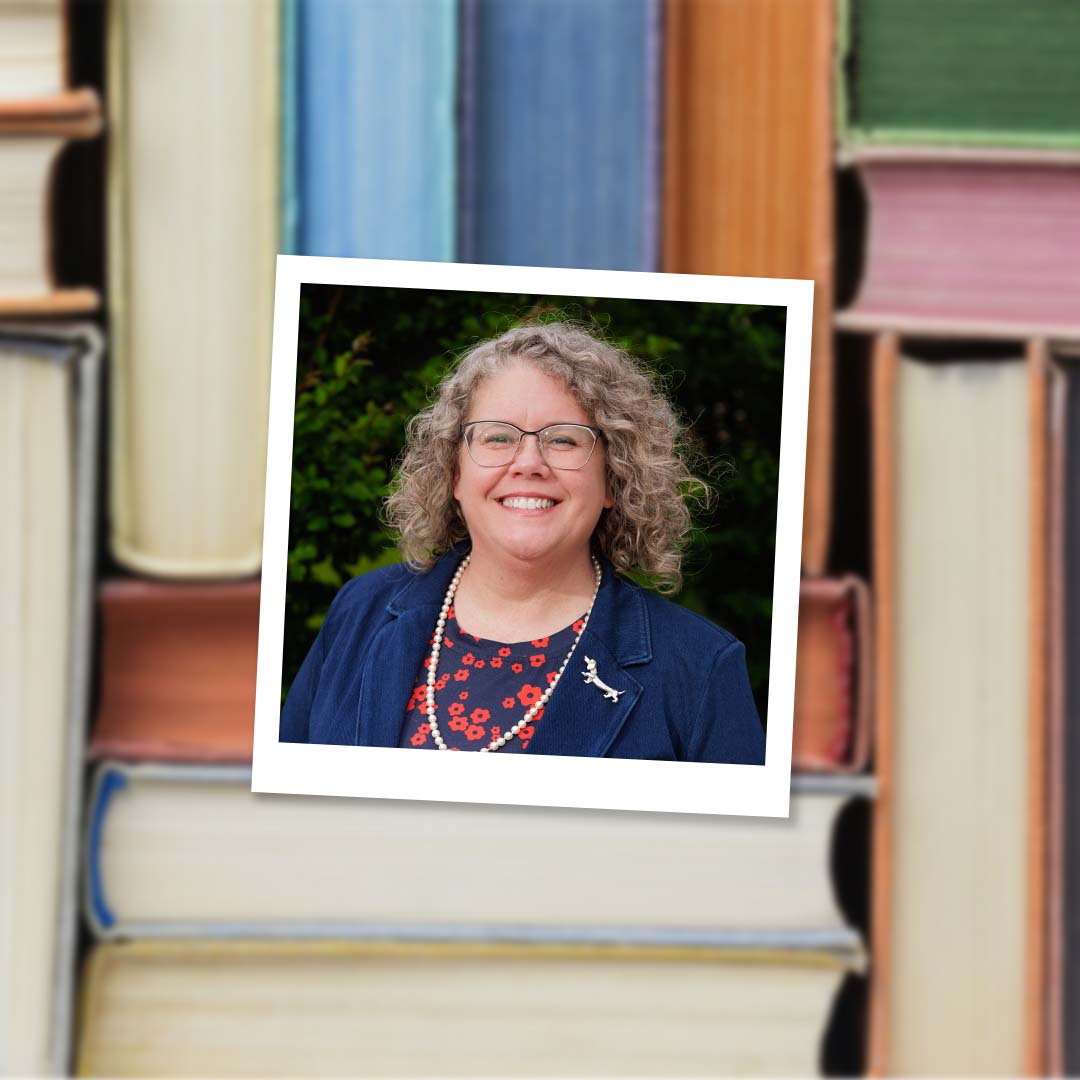
From “Little House on the Prairie” to “Dragonriders of Pern,” Dr. Katherine Cottle “grew up reading and loving books” and now enjoys sharing her passion with students in Wilmington University’s Literature program.
“I love all kinds of books. I’ll talk ‘Beowulf’ or ‘Fahrenheit 451’ with anyone, but I grew up reading romance, mystery, science fiction, fantasy and genres in between,” says Dr. Cottle, WilmU’s chair of Literature and Interdisciplinary Studies. “I’m a huge fan of Nora Roberts, Charlaine Harris, Robin Hobb, Anne Bishop, Neal Stephenson, Octavia Butler, Frank Herbert, Charles de Lint, Bill Bryson and others. One of my recent favorites is ‘Women’s Work: The First 20,000 Years’ by Elizabeth Wayland Barber. It’s about prehistoric technological innovations in textiles.”
Why Study Literature?
WilmU’s 18-credit Literature minor covers a range of cultures, times and voices to help students develop textual analysis and communication skills.
“American Literature (LIT 336) is taught from a cultural perspective, so students learn about the history that is such a direct part of most American literature,” she says. “We’re a pragmatic people and often write with a purpose besides entertainment, like the Declaration of Independence or ‘Sinners in the Hands of an Angry God.’ The class runs backwards chronologically, and we start with current work, including David Foster Wallace’s ‘Consider the Lobster.’ If you’ve never read it, it’s very entertaining.”
Other courses include Multicultural Literature (LIT 400), Adolescent Literature (LIT 302) and Visual Approaches to Literature: The Graphic Novel (LIT 313), the program’s most popular offering.
“Game Design students take the class, but so do Middle Level Education majors — anyone who is going to work with narration as a part of their job,” she says. “When we talk about what’s under the hood in a work of art, graphic novels encourage not just an exploration of literary devices but of visual devices and color theory, too. For instance, why is red so often a color associated with bad guys? From Mars/Ares to the Sith, what does it tell us when a character is associated with red?”
In Nonfiction Literature (LIT 410), students learn to “apply the tools of literature to nonfiction” because “nonfiction is presented as objective, but it’s still subjective,” Dr. Cottle says, explaining how the ability to “identify tone, theme, symbolism and other literary devices” helps students “analyze authorial intent.”
“These skills are essential in an age of misinformation,” she adds. “And it’s fun to practice them on really good writing, like Hunter S. Thompson, E.B. White and Martin Luther King Jr.”
Importance of the Humanities
Dr. Cottle has given a Tedx Talk on the humanities and considers poetry her “first love.”
“Where technology wants to run apace and doesn’t care about the impact on people, the humanities take a deep look at how people are impacted by events and change,” she says, citing “Frankenstein” by Mary Shelley as “one of the first examples of this kind of exploration.”
“The humanities help us to make sense of those events, whether we are looking through the lens of history, economics, culture, literature or art,” Dr. Cottle says. “That perspective is important today as we see large cultural shifts and divides: How do we get folks to focus on what they can do to build a better world for everyone or even improve their little corner of the world?”
As a professor and program chair, she has been making a difference at WilmU since 2002.
“Working at WilmU has been transformative for me: I’ve gotten to live a life of ideas while also helping people achieve their goals,” Dr. Cottle says. “I get to indulge my curiosity and learn about best practices — things that make the classroom experience better for students as well as enhance their learning and ability to transfer what they’ve learned into other tasks or disciplines.”

Learn from dedicated professors like Dr. Katherine Cottle in Wilmington University’s College of Education and Liberal Arts.
From “Little House on the Prairie” to “Dragonriders of Pern,” Dr. Katherine Cottle “grew up reading and loving books” and now enjoys sharing her passion with students in Wilmington University’s Literature program.
“I love all kinds of books. I’ll talk ‘Beowulf’ or ‘Fahrenheit 451’ with anyone, but I grew up reading romance, mystery, science fiction, fantasy and genres in between,” says Dr. Cottle, WilmU’s chair of Literature and Interdisciplinary Studies. “I’m a huge fan of Nora Roberts, Charlaine Harris, Robin Hobb, Anne Bishop, Neal Stephenson, Octavia Butler, Frank Herbert, Charles de Lint, Bill Bryson and others. One of my recent favorites is ‘Women’s Work: The First 20,000 Years’ by Elizabeth Wayland Barber. It’s about prehistoric technological innovations in textiles.”
Why Study Literature?
WilmU’s 18-credit Literature minor covers a range of cultures, times and voices to help students develop textual analysis and communication skills.
“American Literature (LIT 336) is taught from a cultural perspective, so students learn about the history that is such a direct part of most American literature,” she says. “We’re a pragmatic people and often write with a purpose besides entertainment, like the Declaration of Independence or ‘Sinners in the Hands of an Angry God.’ The class runs backwards chronologically, and we start with current work, including David Foster Wallace’s ‘Consider the Lobster.’ If you’ve never read it, it’s very entertaining.”
Other courses include Multicultural Literature (LIT 400), Adolescent Literature (LIT 302) and Visual Approaches to Literature: The Graphic Novel (LIT 313), the program’s most popular offering.
“Game Design students take the class, but so do Middle Level Education majors — anyone who is going to work with narration as a part of their job,” she says. “When we talk about what’s under the hood in a work of art, graphic novels encourage not just an exploration of literary devices but of visual devices and color theory, too. For instance, why is red so often a color associated with bad guys? From Mars/Ares to the Sith, what does it tell us when a character is associated with red?”
In Nonfiction Literature (LIT 410), students learn to “apply the tools of literature to nonfiction” because “nonfiction is presented as objective, but it’s still subjective,” Dr. Cottle says, explaining how the ability to “identify tone, theme, symbolism and other literary devices” helps students “analyze authorial intent.”
“These skills are essential in an age of misinformation,” she adds. “And it’s fun to practice them on really good writing, like Hunter S. Thompson, E.B. White and Martin Luther King Jr.”
Importance of the Humanities
Dr. Cottle has given a Tedx Talk on the humanities and considers poetry her “first love.”
“Where technology wants to run apace and doesn’t care about the impact on people, the humanities take a deep look at how people are impacted by events and change,” she says, citing “Frankenstein” by Mary Shelley as “one of the first examples of this kind of exploration.”
“The humanities help us to make sense of those events, whether we are looking through the lens of history, economics, culture, literature or art,” Dr. Cottle says. “That perspective is important today as we see large cultural shifts and divides: How do we get folks to focus on what they can do to build a better world for everyone or even improve their little corner of the world?”
As a professor and program chair, she has been making a difference at WilmU since 2002.
“Working at WilmU has been transformative for me: I’ve gotten to live a life of ideas while also helping people achieve their goals,” Dr. Cottle says. “I get to indulge my curiosity and learn about best practices — things that make the classroom experience better for students as well as enhance their learning and ability to transfer what they’ve learned into other tasks or disciplines.”
Learn from dedicated professors like Dr. Katherine Cottle in Wilmington University’s College of Education and Liberal Arts.