WilmU One-on-One: Dr. Shiloh Andrus Discusses Her Love of Learning and Desire To Help People Around the World
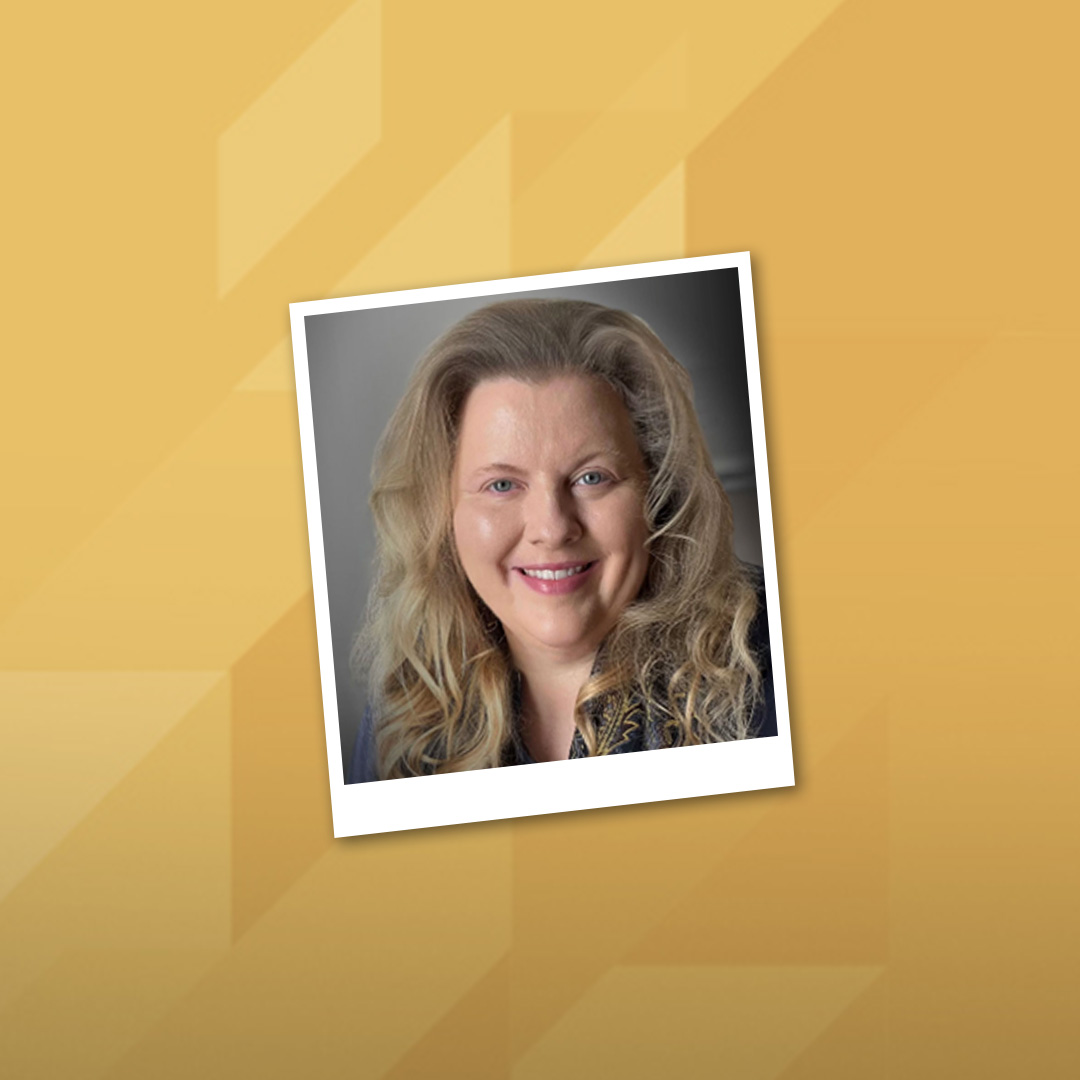
Dr. Shiloh Andrus, chair of the Applied Behavioral Health, Behavioral Science and M.S. in Professional Studies programs, joined Wilmington University in 2012.
An active member of the Association for Applied and Clinical Sociology and the International Society for Emotional Intelligence, she earned an Ed.D. from the University, focusing her research on resilience.
Q. Earlier in your career, you taught at the elementary and high school levels. What led you to WilmU?
Like many educators, I’m a storyteller, driven by a love of learning and a desire to share the possibilities this world offers to those who seek to grow and become. My earliest years as a teacher’s assistant found me absolutely captivated by the moment a student’s eyes lit up with wonder over something newly discovered, making me somewhat of a wondermonger and a bit of a peddling philosopher. From there, the love of learning, people and cultures opened many doors for me to work and volunteer in the nonprofit sector and with faith-based organizations. After two decades of working in these spaces, I began to see a great need for the development of resilience and emotional intelligence for those working with diverse and vulnerable populations. I wanted a platform to help prepare the next generation of helpers, advocates and changemakers. WilmU became the perfect home for that. It was a natural fit since I was also a doctoral student in the College of Education when I was hired as an adjunct for the Behavioral Science program in 2012.
Q. How does your experience working with nonprofits make you a better instructor and program chair?
I found out early on that working in the nonprofit world meant engaging every day with the complex layers of the human experience. For many years, I learned to listen between the lines, recognizing that experiences I saw and the stories I heard, rarely fit into the dusty textbook examples I still held onto from 1999. Those years were my first real lessons in leadership. I learned to slow down and to listen to each person with empathy. I watched the ways systems could help and hinder, and I discovered how critical it is to speak up and act for those who so often remained unseen.
Now, as a instructor and Behavioral Science program chair, those moments help me bridge theory with lived experience. I help students not only learn sociological and behavioral theories as they apply to professions in human services, government, business and industry but also understand these theories through the lens of real-world application, recognizing both the responsibility and the privilege that comes with serving others. It helps me ensure our courses remain relevant and responsive to real needs.
Q. How do you incorporate hands-on learning into the Behavioral Science, Applied Behavioral Health and Professional Studies programs?
When these programs were originally designed, they were built on foundations of applied learning through the intentional use of assessments, such as case studies and scenarios where students learn to evaluate needs, manage crisis, understand and navigate systems, and practice ethical communication skills in real-world contexts. Some examples of this can be found in PHI 302: Ethics in Behavioral Science, where students analyze ethical dilemmas drawn from films, news stories and media to sharpen their professional ethical judgment. In SOC 331: Research Writing and Information Literacy, they work with U.S. Census data to create Excel tables, learning to interpret data for trends and justification. They also complete a brief literature review, understanding the importance of analyzing information for credibility. In SOC 409: Senior Seminar in Behavioral Science, students interview professionals in the field and present their findings in narrated PowerPoints, an experience that helps them understand how real agencies operate. They also engage in advocacy work, writing and presenting well-researched arguments for or against policies.
Altogether, these assignments and others like them give students practical, job-ready skills while connecting academic learning to real-world practice. The goal is simple: When students step into internships, service roles or leadership positions, none of this should feel theoretical or distant. They’ve already practiced the skills, wrestled with the complexity and learned to approach people’s stories with empathy and respect.
“I often remind my students that education is one of the greatest gifts they can give themselves and that choosing growth builds lifelong resilience”
— Dr. Shiloh Andrus
Q. Can you share some ways that WilmU’s Behavioral Health and Behavioral Science students are making an impact?
One thing I love most about our students is that many work full time while also completing their Behavioral Science, Applied Behavioral Health and/or Master of Professional Studies programs. They are out there doing the work, serving in schools, nonprofits, working in business, community and government agencies, hospitals, faith-based programs, youth services, and crisis response organizations, just to name a few. They are constantly bringing fresh, real-world experiences into the classroom and immediately taking new insights back out into the field. From that perspective, I see impact happening in both directions, and this is always a plus within a program.
Additionally, I am very proud of our Pi Gamma Mu honor society students who complete 15 hours of community service as part of their requirements for induction. One of the most rewarding experiences in my role as chair has been hearing the stories of these students working with the most vulnerable populations within their various communities, listening, learningand growing. Additionally, since 2010 and under the leadership of Dr. Johanna Bishop, Pi Gamma Mu students have participated in the annual Polar Bear Plunge in Rehoboth Beach, Delaware, raising funds in support of Special Olympics. All of this highlights the importance of giving back to one’s community and making a meaningful difference through service to others.
Q. What’s one piece of advice you give your students?
I often remind my students that education is one of the greatest gifts they can give themselves and that choosing growth builds lifelong resilience. Paulo Coelho captures this idea in his quote: “When we strive to become better than we are, everything around us becomes better too.” That’s what I want for my students. To love learning, to remember they are worth the effort and to choose curiosity over certainty. Come from a place of learning rather than knowing. Seek to understand rather than to be understood. When you do that, you grow not just academically but in character and compassion. And that kind of growth is lasting and makes everything worth the effort.
Q. You’ve helped provide humanitarian aid around the world. Could you tell us more about your volunteer work?
Over the years, I have been privileged to travel to 22 countries with various humanitarian and faith-based organizations providing support to various communities in need. In my earlier years, I found myself in the sacred spaces of the most vulnerable of this world, where the opportunity for me to grow as a person was humbly formed through interactions with the most disadvantaged. Mud floors and snow falling through thatched roofs into paper cups of steaming hot tea became the scene for my most formative days of learning and growth. And while I might have volunteered for these experiences with the desire to help others, I found that I was the one who was the most impacted. Over the years, the bustling streets, colorful marketplaces and welcoming homes of new friends became a university for one, and I was the eager pupil, absorbing the culture, the warmth and the vibrance of the people around me.
Most recently, in August 2024, I had the privilege of traveling to Malawi with a team to visit two community center organizations we helped to fund. I was also honored to tour the Beit Cure Children’s Hospital and look forward to supporting the important work of this remarkable organization in the future. These experiences instilled a deep respect for human dignity and a lifelong love for people and cultures, and they continue to shape the way I approach volunteer work, teaching and leadership today. One more piece of unsolicited advice? If you have the opportunity to travel, to broaden your worldview, to see this world through the lens of another, always, always, always say yes!
Q. What do you love about WilmU?
You know, I think WilmU is truly special because it’s a place where people’s lives genuinely change. Over the past 13 years, I’ve been honored to work with students who are hardworking and resilient, often balancing families, careers and big dreams. Being able to walk alongside them as they pursue those big dreams has been an incredible privilege. What makes working here even more meaningful to me is how closely WilmU’s core values align with my own: a commitment to understanding and respecting one another, integrity guiding every choice, educational opportunity as a primary purpose, and intentional responsiveness to the diverse needs of our community. To be part of that? It’s truly an honor.
Learn from dedicated professors like Dr. Shiloh Andrus in Wilmington University’s College of Social and Behavioral Sciences.
Dr. Shiloh Andrus, chair of the Applied Behavioral Health, Behavioral Science and M.S. in Professional Studies programs, joined Wilmington University in 2012.
An active member of the Association for Applied and Clinical Sociology and the International Society for Emotional Intelligence, she earned an Ed.D. from the University, focusing her research on resilience.
Q. Earlier in your career, you taught at the elementary and high school levels. What led you to WilmU?
Like many educators, I’m a storyteller, driven by a love of learning and a desire to share the possibilities this world offers to those who seek to grow and become. My earliest years as a teacher’s assistant found me absolutely captivated by the moment a student’s eyes lit up with wonder over something newly discovered, making me somewhat of a wondermonger and a bit of a peddling philosopher. From there, the love of learning, people and cultures opened many doors for me to work and volunteer in the nonprofit sector and with faith-based organizations. After two decades of working in these spaces, I began to see a great need for the development of resilience and emotional intelligence for those working with diverse and vulnerable populations. I wanted a platform to help prepare the next generation of helpers, advocates and changemakers. WilmU became the perfect home for that. It was a natural fit since I was also a doctoral student in the College of Education when I was hired as an adjunct for the Behavioral Science program in 2012.
Q. How does your experience working with nonprofits make you a better instructor and program chair?
I found out early on that working in the nonprofit world meant engaging every day with the complex layers of the human experience. For many years, I learned to listen between the lines, recognizing that experiences I saw and the stories I heard, rarely fit into the dusty textbook examples I still held onto from 1999. Those years were my first real lessons in leadership. I learned to slow down and to listen to each person with empathy. I watched the ways systems could help and hinder, and I discovered how critical it is to speak up and act for those who so often remained unseen.
Now, as a instructor and Behavioral Science program chair, those moments help me bridge theory with lived experience. I help students not only learn sociological and behavioral theories as they apply to professions in human services, government, business and industry but also understand these theories through the lens of real-world application, recognizing both the responsibility and the privilege that comes with serving others. It helps me ensure our courses remain relevant and responsive to real needs.
Q. How do you incorporate hands-on learning into the Behavioral Science, Applied Behavioral Health and Professional Studies programs?
When these programs were originally designed, they were built on foundations of applied learning through the intentional use of assessments, such as case studies and scenarios where students learn to evaluate needs, manage crisis, understand and navigate systems, and practice ethical communication skills in real-world contexts. Some examples of this can be found in PHI 302: Ethics in Behavioral Science, where students analyze ethical dilemmas drawn from films, news stories and media to sharpen their professional ethical judgment. In SOC 331: Research Writing and Information Literacy, they work with U.S. Census data to create Excel tables, learning to interpret data for trends and justification. They also complete a brief literature review, understanding the importance of analyzing information for credibility. In SOC 409: Senior Seminar in Behavioral Science, students interview professionals in the field and present their findings in narrated PowerPoints, an experience that helps them understand how real agencies operate. They also engage in advocacy work, writing and presenting well-researched arguments for or against policies.
Altogether, these assignments and others like them give students practical, job-ready skills while connecting academic learning to real-world practice. The goal is simple: When students step into internships, service roles or leadership positions, none of this should feel theoretical or distant. They’ve already practiced the skills, wrestled with the complexity and learned to approach people’s stories with empathy and respect.
“I often remind my students that education is one of the greatest gifts they can give themselves and that choosing growth builds lifelong resilience”
— Dr. Shiloh Andrus
Q. Can you share some ways that WilmU’s Behavioral Health and Behavioral Science students are making an impact?
One thing I love most about our students is that many work full time while also completing their Behavioral Science, Applied Behavioral Health and/or Master of Professional Studies programs. They are out there doing the work, serving in schools, nonprofits, working in business, community and government agencies, hospitals, faith-based programs, youth services, and crisis response organizations, just to name a few. They are constantly bringing fresh, real-world experiences into the classroom and immediately taking new insights back out into the field. From that perspective, I see impact happening in both directions, and this is always a plus within a program.
Additionally, I am very proud of our Pi Gamma Mu honor society students who complete 15 hours of community service as part of their requirements for induction. One of the most rewarding experiences in my role as chair has been hearing the stories of these students working with the most vulnerable populations within their various communities, listening, learningand growing. Additionally, since 2010 and under the leadership of Dr. Johanna Bishop, Pi Gamma Mu students have participated in the annual Polar Bear Plunge in Rehoboth Beach, Delaware, raising funds in support of Special Olympics. All of this highlights the importance of giving back to one’s community and making a meaningful difference through service to others.
Q. What’s one piece of advice you give your students?
I often remind my students that education is one of the greatest gifts they can give themselves and that choosing growth builds lifelong resilience. Paulo Coelho captures this idea in his quote: “When we strive to become better than we are, everything around us becomes better too.” That’s what I want for my students. To love learning, to remember they are worth the effort and to choose curiosity over certainty. Come from a place of learning rather than knowing. Seek to understand rather than to be understood. When you do that, you grow not just academically but in character and compassion. And that kind of growth is lasting and makes everything worth the effort.
Q. You’ve helped provide humanitarian aid around the world. Could you tell us more about your volunteer work?
Over the years, I have been privileged to travel to 22 countries with various humanitarian and faith-based organizations providing support to various communities in need. In my earlier years, I found myself in the sacred spaces of the most vulnerable of this world, where the opportunity for me to grow as a person was humbly formed through interactions with the most disadvantaged. Mud floors and snow falling through thatched roofs into paper cups of steaming hot tea became the scene for my most formative days of learning and growth. And while I might have volunteered for these experiences with the desire to help others, I found that I was the one who was the most impacted. Over the years, the bustling streets, colorful marketplaces and welcoming homes of new friends became a university for one, and I was the eager pupil, absorbing the culture, the warmth and the vibrance of the people around me.
Most recently, in August 2024, I had the privilege of traveling to Malawi with a team to visit two community center organizations we helped to fund. I was also honored to tour the Beit Cure Children’s Hospital and look forward to supporting the important work of this remarkable organization in the future. These experiences instilled a deep respect for human dignity and a lifelong love for people and cultures, and they continue to shape the way I approach volunteer work, teaching and leadership today. One more piece of unsolicited advice? If you have the opportunity to travel, to broaden your worldview, to see this world through the lens of another, always, always, always say yes!
Q. What do you love about WilmU?
You know, I think WilmU is truly special because it’s a place where people’s lives genuinely change. Over the past 13 years, I’ve been honored to work with students who are hardworking and resilient, often balancing families, careers and big dreams. Being able to walk alongside them as they pursue those big dreams has been an incredible privilege. What makes working here even more meaningful to me is how closely WilmU’s core values align with my own: a commitment to understanding and respecting one another, integrity guiding every choice, educational opportunity as a primary purpose, and intentional responsiveness to the diverse needs of our community. To be part of that? It’s truly an honor.
Learn from dedicated professors like Dr. Shiloh Andrus in Wilmington University’s College of Social and Behavioral Sciences.